The Edinburgh Integration Joint Board (EIJB), which oversees the city’s health and social care services, is set to slash £4.5m of grants currently shared between 64 organisations.
The funding supports organisations carrying out preventative and early intervention work with vulnerable residents – including dementia sufferers, disabled young people, rape victims, those on low incomes, and new parents.
The grant funding was expected to continue until at least March next year, with the possibility of a further extension.
The cuts to community grants, if approved and implemented, will result in 142 redundancies and unacceptable cuts in services.
Protest at the City Chambers from 9.15am on Friday 1st November – organisations effected by the cuts and Edinburgh Trades Union Council will be making deputation to the EIJB
Thanks to Des Loughney from Edinburgh Trades Union Council for permission to republish this report
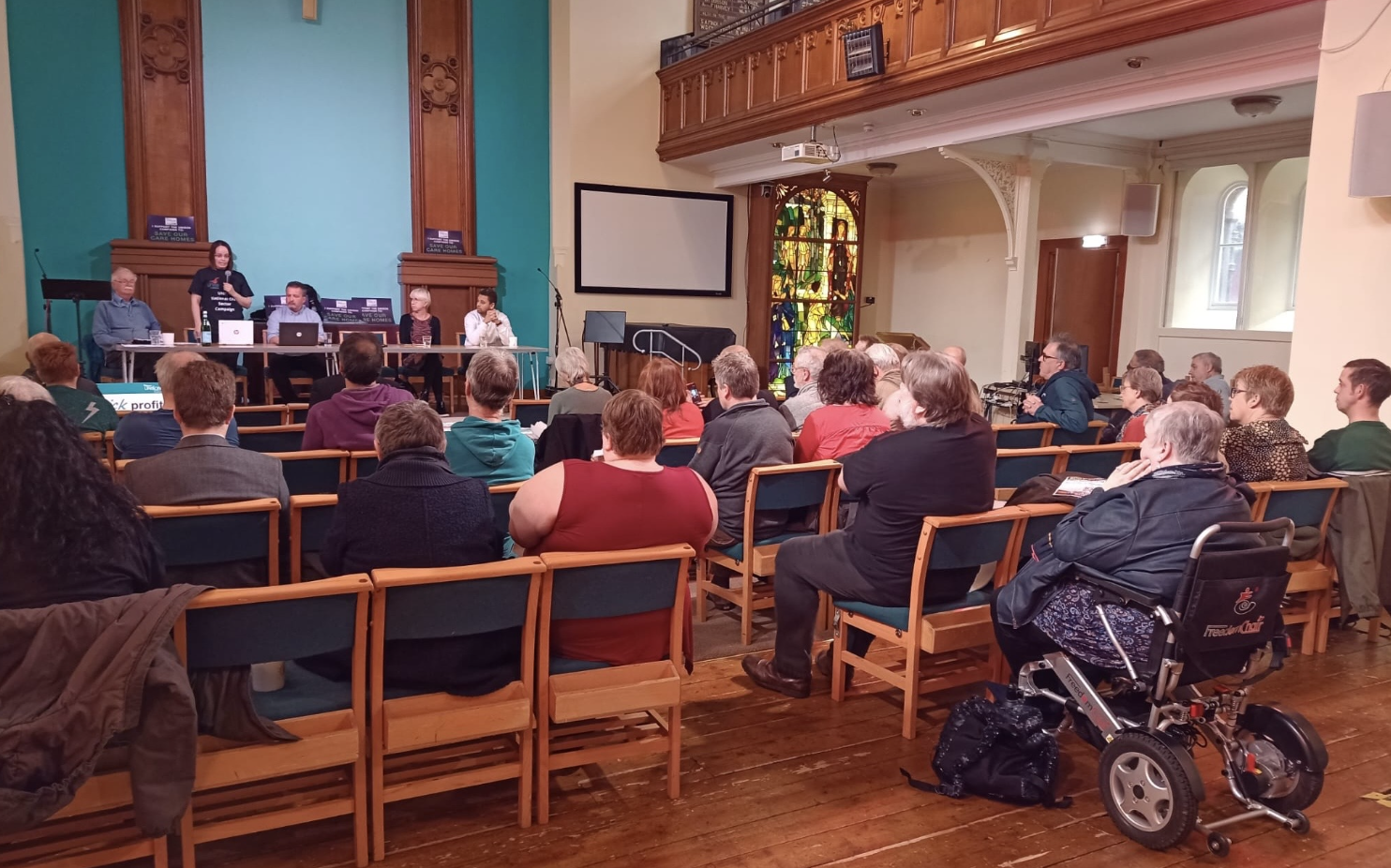
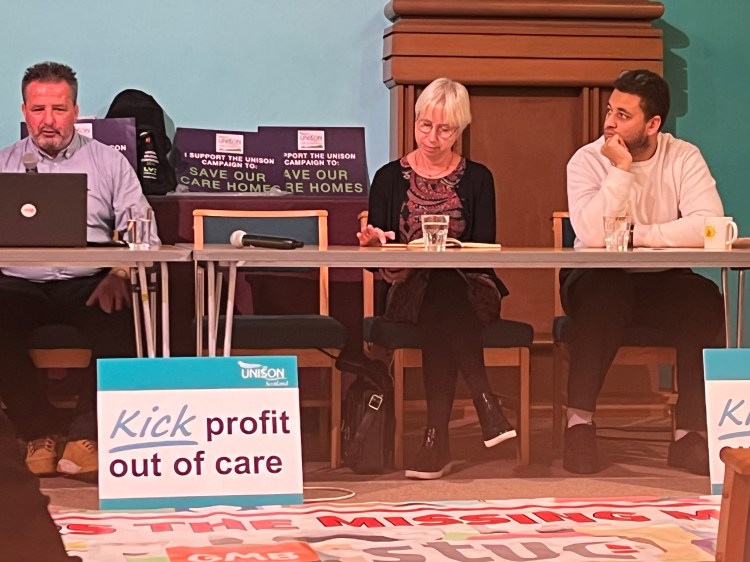
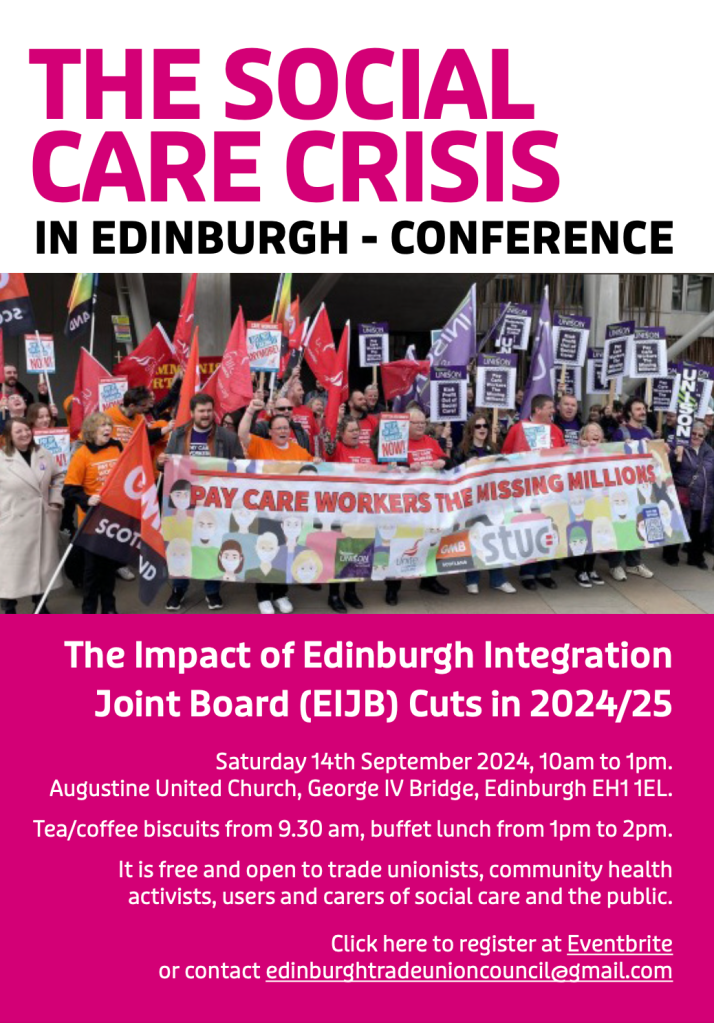
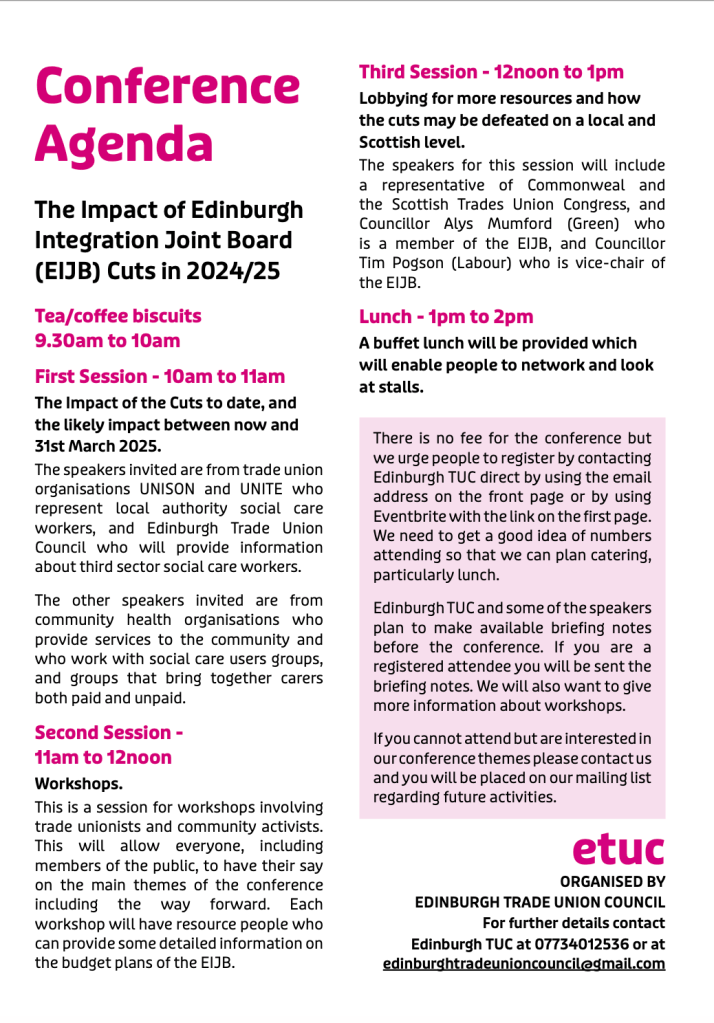
The Conference was held on Saturday 14th September 2024 between 10am and 1pm within the Augustine United Church, George IV Bridge, Edinburgh.
The Conference was organised by Edinburgh Trade Union Council. It was sponsored by the UNITE City of Edinburgh Council Branch, the UNITE Edinburgh Not For Profit Branch, the UNITE Lothian and Edinburgh Retired Members Branch, the Edinburgh branch of the EIS, and the Scottish Trades Union Congress. Sponsorship enabled Edinburgh TUC to cover all the costs of the Conference including catering and hiring the venue.
The conference was chaired by Ian Mullen, Vice Chair of Edinburgh TUC, and official of the UNISON City of Edinburgh Council Branch.
57 people registered for the Conference. A further 30 people conveyed their apologies and asked to be kept in touch with developments. The Conference was attended by four Councillors, and three MSPs (or their representatives). The attendees included trade union activists, community health activists, service users and carers.
Two briefing notes for the Conference were sent to all those who registered. One note referred to the Financial Update which was submitted to the Edinburgh Intergration Joint Board meeting on 20/8/24 and the other referred to a Report by Audit Scotland on Integration Joint Boards, Finance and Performance 2024. The Report was published in July 2024. Both notes are attached.
The speaker from Commonweal at the Conference was Kathy Jenkins. Her contribution is attached.
We are grateful for the reports from the workshop leader, Carmen Simon, and the notes of Ian Mackay.
The population of Edinburgh is currently growing at 1.7% per annum or 8,680 people. A fifth of the Scottish population is 65 or over.
First Session – The Impact of the Cuts
Community health projects have had their funding cut by either 10% or 20%. This had been done without proper consideration of the effective service that was being delivered by the projects or recognition of the impact on their integration with services such as those provided by Health Centres. Their preventative work is being harmed. The terms and conditions of social care workers has been worsened. Vacancies are not being filled so that work becomes more stressful. The cuts are taking advantage of low paid, vulnerable social care workers. Support for unpaid carers has been cut. Support for volunteers who assist third sector organisations has been cut.
There have been efforts to cut sleepovers to save money without appropriate consideration of the consequences for the service users. There has also not been consideration of the consequences of low paid workers losing their sleepover allowance. The wages of support workers is so low, living in a city such as Edinburgh, that some have to use foodbanks.
There has not been appropriate recognition that demand for services is not standing still but that it is increasing.
The point was made that, according to the STUC, an extra £2.5 billion could be raised in Scotland by taxing the better off. Some of that could be invested in bolstering social care. It is not true that there is no money. With the political will there could be.
After the speakers presentation there was a session of questions and contributions which reinforced the points that the speakers had made. People said that Edinburgh’s social care system is broken and dysfunctional.
Second Session – Workshops
Conference members took part in three workshops and were asked to look at three questions. 1) How do we emphasize the important of preventative work? 2) How do we measure demand for services, including increasing demand? 3) How should we campaign for more resources?
Here is an amalgamation of the workshop reports.
There was a common understanding of participants of the critical situation of social care in Edinburgh and Scotland. Some of the participants shared heartbreaking stories about the lack and /or inappropriate support that themselves or loved ones have received.
People in the workshops described the process of accessing a care package and / or not getting the care package cut by the Local Authorities as “a battle” or a “fight”
FUNDING FOR PREVENTION
Even though the Feeley report commissioned by the Scottish Government after the Covid pandemic, strongly recommended investment in prevention, this area has been neglected because there is a lack of resources. IJBs only address critical and substantial needs. Everybody in the room acknowledged that this false economy approach to social care will only exacerbate the crisis in social care
Participants agreed that language is important. We should talk about investment and not cost, we should talk about the value of social care and the cost of not investing in the sector.
People agreed that now is the time to liaise with service users, their families, and the workforce to lobby politicians and decision makers about this crisis and the need to invest in prevention services. Sarah Boyack MSP suggested the upcoming Scottish elections in 2026 as a time frame to build a coalition with stakeholders.
Some group members who work for charities highlighted the fact that they submitted plenty of data about the service they provide, the impact on people and the gaps they face in the service. They believed that it is not for lack of data that funding is not allocated to social care, but lack of political will.
SOCIAL CARE DEMAND
Everyone knows that the demand for social care will increase in the future due to people living longer and other factors such as the consequences of COVID and mental health epidemics. Measurimg exactly what the demand will be would be difficult but not impossible.
It was suggested that an exercise using proxy measurements could be done, involving public health data, university researchers and people with lived experience.
In her workshop Councillor Alys Mumford, a member of the EIJB, acknowledged that at the moment there is not a real provision for the increase in demand for social care. It was pointed out by a member of the group that the private sector will be the one stepping in to provide services. Alys agreed this would indeed most likely be the case.
Participants shared the idea that we should campaign together to stop the privatisation of social care. Some of the people agreed to be involved in a campaign going forward to make sure that the provision of social care will not only meet the basic needs of people needing support but also a provision that would enable people to thrive.
A working group considered that we ought to think about how we present the crisis in social care to the public, in seeking their support. We need to change the narrative to celebrate the good work which may be cut. We need to emphasize the resources that are required to support carers, paid and unpaid. Resources need to be allocated to empowering user groups.
Amongst the information that the public need is the performance of the private sector. What is the difference in quality between the private sector and the public sector/third sector? How much of taxpayer’s money is wasted funding the profits of the private sector? People were worried that if it is necessary to do more to meet demand the private sector will be asked to accomodate the increased demand with a low quality, cheap, service. This is because the private sector will offer cheaper services made possible by lower pay and lower staffing levels. User needs will not be put furst.
Third Session – The Way Forward: Campaigning for More Resources
Denise Christie of the Scottish Trade Union Congress reported on trade union efforts to campaign for more resources including better terms and conditions for social care workers. The programme includes training for trade union reps and the setting up of networks for sharing information and for campaigning. An objective is the lobbying of the Scottish Parliament and MSPs.
Kathy Jenkins spoke on behalf of Commonweal using information that was in the Audit Scotland Report on Integrated Joint Boards in Scotland. The Commonweal policy was that IJBs should be replaced and their function devolved to local authorities who would then further devolve to local communities. This would allow services to be truly co-designed with users/ workers and communities and to be, as far as possible, locally provided through local service hubs. Care should be ‘not for profit’ like the NHS and free at the point of need, recognising that it will take some time and a clear plan to move away from private provision. There must be good support, including support for taking sufficient breaks, for unpaid carers. The money that is wasted on private sector profit should be reallocated to support carers both paid and unpaid.
Councillor Alys Mumford who is a member of the EIJB said that more money for IJBs has to be framed as an investment that will pay ‘dividends’ in terms of the gain for the public and services users. One of the problems with IJBs is that they are responsible for the provision of services but are not able to set their budgets.
Councillor Tim Pogson said that a campaign against underfunding needs to start today celebrating good services that have been developed and need to continue to be developed. More resources needs to be made an issue in the next elections for the Scottish Parliment. These are scheduled for 2026 but could take place sooner as the SNP does not have an overall majority and may have a crisis of confidence that could lead to a general election.
There were many comments and questions from conference participants. We need to campaign to get the message across to the public that more money is needed for prevention and the parasitic role of the private sector needs to be exposed and curtailed. We need to have a strategy of using social media. We need to develop street stalls as a way of getting the issues across to the public. It was hoped that the local unions who sponsored the conference (UNITE, EIS) with the help of UNISON and the GMB will organise a programme of street stalls to get support from the public and social care workers. They could help recruit care workers to unions, particularly those care workers in the private sector.
People called on the STUC to, in the near future, organise a ‘Crisis Summit’ which may may bring the issues to public attention.
This Report is to be circulated to conference participants. It will be sent to all those who expressed an interest in the conference but could not attend. It will
be sent to Edinburgh politicians, trade unions and community organisations, including organisations of users and carers.
Edinburgh TUC will consider the feedback from the conference and how it can play a useful role in developing the campaign in Edinburgh.
Des Loughney Secretary Edinburgh Trade Union Council
Pete Cannell reflects on the recent EIJB meeting which agreed cuts of close to £50 millions in the budget for health and social care. We welcome other contributions on these issues, particularly personal experiences and ideas for campaigning.Use the contact form to get in touch.
A cuts budget – again
On Monday 18th March the Edinburgh Integration Joint Board (EIJB) which is responsible for health and social care services in the city agreed its 2024/5 budget. There’s an eyewatering £67 million gap between the EIJB’s income and projected expenditure for the year. In agreeing the budget board members gave the greenlight to a long list of measures that will mean a further serious deterioration in services.
I listened in via the webcast to most of the debate. The main discussion was preceded by strong deputations from the council unions, Edinburgh TUC and third sector organisations. While the deputations highlighted the impact of the proposed budget on lives and livelihoods, once they finished the board’s deliberations were a million miles away from the lived experiences of those in need of care and of the workers in the care system. What stood out for me was not the things that were said but those that went unmentioned. You wouldn’t have known from the debate that just a year previously the Care Commission had published a damning report on the state of social care in Edinburgh. Among a long list of failings, the report concluded that:
… there were structural weaknesses in the planning and delivery of services in the health, social work and social care system. This led to areas of service gaps which in turn resulted in too many people and carers not receiving services at the right time or place.
And that
Staff vacancies, turnover and absences impacted on staff’s capacity to undertake their roles and responsibilities as fully and to the quality they desired. There was not a sufficiently available capacity of appropriately qualified staff to deliver the intended assessment, care planning, service delivery and review outcomes.
Neither would you have known that Edinburgh stands out among local authorities in Scotland for the level of privatisation and outsourcing of care, which means that across the service private companies are raking in profits from money that we provide through taxation.
Hitting the most vulnerable
So the proposals before the board on 18th March have to be seen in the context of a system already in crisis, and where the most significant action by the board since March 2023 has been a programme of reviewing care packages with the very clear aim of cutting provision to save money.
The EIJB approved all the proposals before it. A list of actions that will hit vulnerable people and their families across the city.
Third sector organisations will all suffer 10% cuts to their services. At the beginning of the meeting representatives from some of the groups affected gave stark examples of what these cuts mean in practice. And they made it clear that the services and support that they will no longer be able to offer will have direct impacts on the quality of life of hundreds of people and will in the medium to long term add to demand for services elsewhere, most notable the NHS. The Be Able service – operating to support older people in the Southeast of the city will lose all its funding.
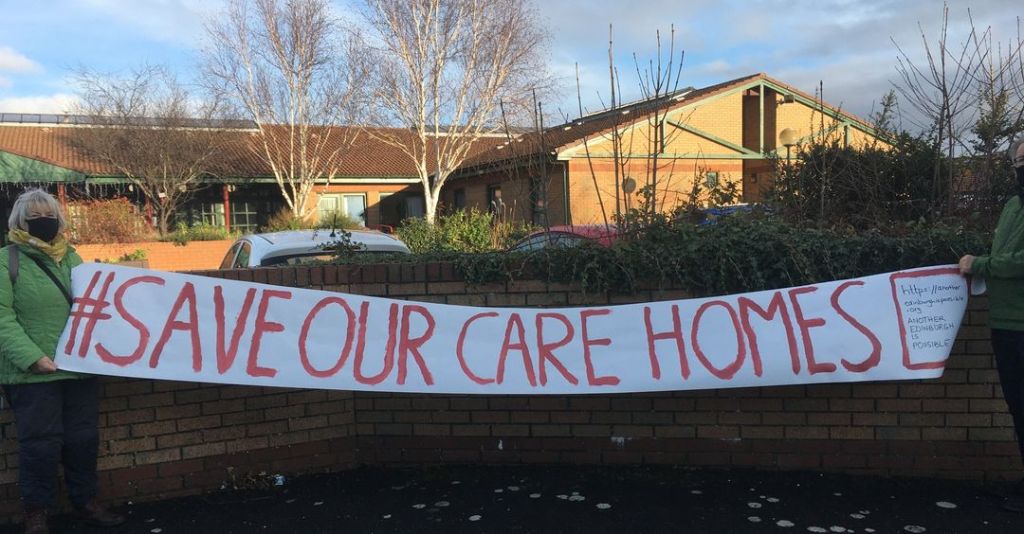
The Ford’s Road and Clovenstone care homes are to be closed. Further reducing the public provision of residential care for the elderly. No recognition that elected Edinburgh councillors voted last May for the proposition that residential care should be a public service!
The programme of reviewing care packages will continue. A process where the odds are stacked against the most vulnerable and the poor and those who have no one to speak for them. In addition, proposals included an increased use of income generation through charging for services or equipment, again hitting the poorest hardest.
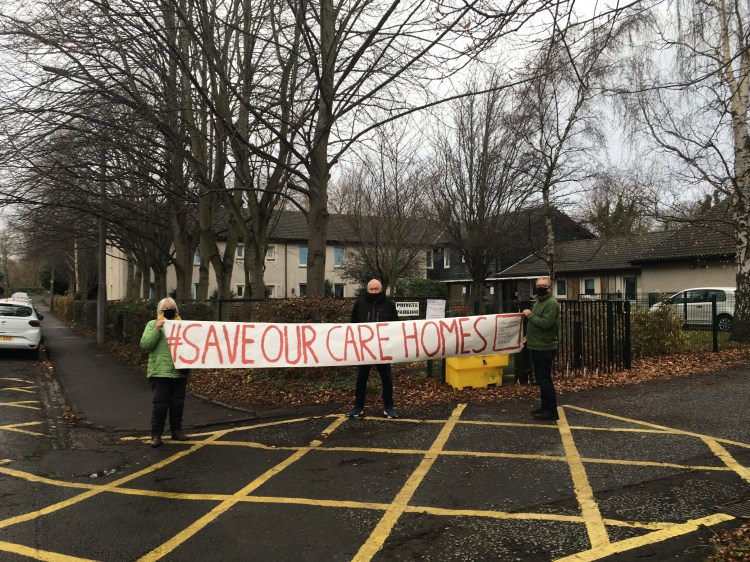
Image by Pete Cannell – Public Domain
Ratcheting up inequality
These are just some of the measures agreed. At every level Council, Scottish Government and NHS paper policies on fair work, poverty reduction, inclusion and equality are ignored and contradicted. The EIJB plans hit women hardest – women as care workers, as unpaid carers and as service users.
It’s not possible to go through all the implications of the new budget in a short article but it is worth noting that the plans are likely to fail even in their own terms and it may only be months before the next crisis budget meeting. Many of the agreed actions are sheer fantasy. The words ‘grip and control’ appear again and again through the budget paper. Apparently by getting a ‘grip’ – services can be procured more cheaply, and savings can be made. It seems highly unlikely that at a time of rising prices and with a system that has failed to do these things in the past, appointing a few new managers will save many millions of pounds.
What can we do?
In my view campaigning against the care cuts will not stop the spiral of decline unless we start by being clear about root causes. There is so much evidence that outsourcing care to the private sector had driven the decline of quality in health and social care provision. The case for removing profit from care is overwhelming. In addition, maximising profit for private companies drives low pay and high staff turnover, and while care workers work heroically to do the best job they can, they do it in a system where experience and expertise is underpaid and undervalued. So, at the front of our campaign, we have to say:
Take care back into democratic public ownership.
Pay care workers a proper wage that recognises their professionalism and the value of their work.
But how do we do this? We need a powerful, united campaign that includes unions, community groups, carers, and service users. And we don’t have that right now. The first steps in building campaigns that really make a difference are always difficult. No one person, or group has all the answers but together we can crowdsource ideas. I think we we’ll only be able to make this happen if we start getting the real stories of what it’s like to be old, or sick or in need of support into the public domain. At any point in time the need for social care may seem to be an issue for just a minority but in reality, it will affect almost all of us.
9am Monday 18th March – at Edinburgh City Chambers
The Edinburgh Integration Joint Board which runs the social care system in the city meets at 10am at the City Chambers. The agenda for the meeting is not yet available. But as has been widely documented – see for example https://anotheredinburghispossible.org/blog/ social care is in chaos, large numbers of people are suffering as a result and there is a £67 million whole in the 2024/5 budget. Join us outside the City Chambers to make it clear that this is not acceptable, that social care should be in the public sector, not for profit, and that urgent action needs to be taken at City and Scottish Government level to resolve the crisis so that people’s needs are properly met. Bring banners and placards, mobilise your community group and union branch.
Millions of pounds have been spent on hiring agency social workers to review care packages. It’s about cutting packages not reviewing them – however, the new chief officer of the EIJB has emailed councillors essentially saying that there might be push back about this process. We heard one story of how a package was cut – people are guilt tripped by being told that there are others who are worse off who need support – families face this exercise on their own and it’s hard to appeal or complain.
We spoke to Mary about the impact of this process and the resulting cut in the care package received by her son John.
John has lived in supported accommodation for more than a decade with a care package designed to support his basic needs and allow for independent living. During this period the care package was reviewed by an experienced social worker with insight into John’s needs. However, in 2023 the Health and Social Care Board (aka Edinburgh Integration Joint Board or EIJB) decided to contract agency social workers to review care packages.
Mary explained what happened next. The agency social worker got in touch to arrange a review meeting with Mary and John. They insisted that the meeting had to take place almost immediately because they were working to a tight schedule. The meeting went ahead. At the outset the social worker explained that there was high demand for care packages and that levels of care currently being received by individuals already in the system meant that people with greater need were not able to access support. Mary felt that this was an entirely inappropriate way to begin a review – essentially trying to guilt trip her and John. The rest of the meeting was similarly unsatisfactory with the social worker showing very little insight into John’s needs and experience. In this context John’s own voice was marginalised.
The social worker explained that she would report back to her manager and a decision would be made but that she would speak to Mary beforehand to inform her of what was being recommended. In fact, that conversation didn’t take place, and just over a week after the review Mary and John were informed that the care package would be cut by 55%. This was devastating news; the reduced support would mean that basic needs were not met and John’s opportunities for a social life outside his home would cease.
Mary responded by making it clear that she would make a complaint at the highest level if the new package was implemented. The cut was then reduced to 14%. This still has a big impact and Mary, now retired, must fill in gaps herself. She is very aware that had she not had the confidence and knowledge to argue back against the social worker’s recommendation the situation would be so much worse. And she wonders how many individuals who didn’t have the support to push back are now living with totally inadequate support.
This letter from Nick Kempe was published in the Herald on 28th Feb 2024 – we reprint it here with Nick’s permission.
A perfect illustration of how managers of Scotland’s “integrated” health and social care services ignore the impact of the cuts they are imposing (The collapse of social care Letters 27th February) comes from a recent paper to the Edinburgh Integrated Joint Board. In assessing the case for £67m cuts in the city next year it states “Equality and integrated impact assessment. There are no specific implications arising from this report” and “Quality of care. There are no specific implications arising from this report.”
As Duncan MacGillivray observes, we have managers beyond caring and who no longer have any interests in the needs of the people our health and social care services are supposed to serve.
While UK Government imposed austerity and neoliberal philosophy, which asserts everyone is responsible for their own problems, has helped create the new breed of uncaring public service manager, the continued attempts by the Scottish Governments to integrate care with health hasn’t helped. As if the challenge of managing health or social care services was not enough, the Scottish Government now expects managers to do both when Scottish Ministers find it difficult enough to handle one brief. Not only are both social care and health very complex in themselves, broadly speaking they involve very different knowledge, skills and philosophies as the people who use services know only too well. Hence, the medical model of disability and the social model of disability. Combining the two is an impossible job, hence the alienation of senior managers and their rapid turnover in the Health and Social Care Partnerships.
There is little evidence to support the idea that management can force these two systems together and the failures are well documented in Audit Scotland’s reports on “integration”. Despite this, and despite being forced by Cosla in the Verity House agreement to accept that local government should retain some responsibility for care, integration is still at the centre of the Scottish Government’s misconceived plans to create a National Care Service. The latest proposed structure is tripartite and will involve the Scottish Government, the NHS and local authorities running a new version of the Integrated Joint Boards. No mechanisms have been proposed that would ensure these new boards and the senior managers who report to them will be any more accountable than the Edinburgh IJB is now.
If Scotland is to avoid these management failures going forward, we need to empower health and social care staff who are on the front line to speak out about what is really happening. Managers should then be required to support that by giving as much priority to needs as to budgets. Integration undermines possibility that by forcing managers to take responsibility for people and services in which they have little or no expertise. Rather than asking managers to do the impossible, we would be far better keeping care and health separate and resourcing front-line services so they have time to work together as required for the benefit of the people who need them.
Protest as Edinburgh City Council meets to set a budget for 2024/5
9am Thursday 22nd February at the City Chambers 253 High St, Edinburgh EH1 1YJ
The council meets to decide its budget on 22nd February. In the run up to it there is very little information and no debate about what areas are likely to have cuts in funding.
The budget cuts follow more than a decade of year-on-year reductions in spending on public services in the city.
The City of Edinburgh Council financial gap for 2024 – 2025 is £ 21 million.
For future years the estimated cumulative Council funding gaps, 2025/26 to 2028/29 are (£million) 37.5; 63.4; 93.8; 143.0.
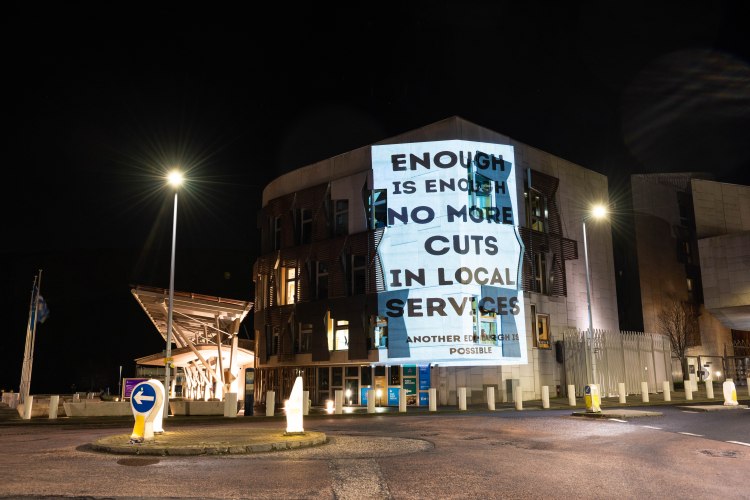
It’s time to end the cycle of cuts and restore levels of funding for local services. This protest is not a last gasp attempt to stop the cuts but part of an ongoing fight to insist that the local authority and the Scottish government take local services seriously. Bring banners and placards. Organise delegations from you union branches and community groups – it’s time to say enough is enough.
The consequences of the budget are far from transparent – and in this Evening News article Ross McKenzie highlights the lack of democracy and accountability and the huge cap in the provision for health and social care.
Protest outside the EIJB meeting: 9am – 10.30am Friday 9th February – No Place for Profit in Care – assemble outside the City Chambers 253 High St, Edinburgh EH1 1YJ
Why we are protesting
The Edinburgh Integration Joint Board (EIJB) meets on 9th February. It’s nearly a year now since the Care Inspectorate published a devastating report on the existing state of the health and social care that is administered by board, and in that time it’s not clear that any of the problems identified by the report have been addressed. Care packages are being slashed, posts are being left unfilled and the workforce is being put under unbearable pressure.
The budget deficit continues to grow but it’s very hard to work out either the size of the shortfall or the consequences of the deficit from the documentation provided for the board meeting. However, we now understand that the board is forecasting an astonishing £67.6 million funding gap for 2024/25. Including further cuts to care packages of £15 million.
At this week’s meeting of the Council’s Finance and Resources Committee EIJB Chief Officer Pat Togher said in the context of the gap:
“The amount of money that needs to come out of the service this year will have a huge impact on the service. There will be a requirement to change behaviour and expectations and to reset the social contract with the citizens of Edinburgh. What people have experienced so far with care packages will change dramatically given the scale of what we have to save. It will be a serious struggle to deliver our statutory duties”.
The Edinburgh Integration Joint Board (EIJB) meets on 9th February. It’s nearly a year now since the Care Inspectorate published a devastating report on the existing state of the health and social care that is administered by board, and in that time it’s not clear that any of the problems identified by the report have been addressed. Care packages are being slashed, posts are being left unfilled and the workforce is being put under unbearable pressure.
Protest outside the EIJB meeting: 9am – 10.30am Friday 9th February – No Place for Profit in Care – assemble outside the City Chambers 253 High St, Edinburgh EH1 1YJ [There will be a deputation to the meeting from Edinburgh TUC]
In 2023 trade unions and the public were promised a public consultation on the “Future of Social Care in Edinburgh”. This consultation was regarded as essential so that informed decisions that the public would understand can be made. The consultation has been dropped.
The budget deficit continues to grow but it’s very hard to work out either the size of the shortfall or the consequences of the deficit from the documentation provided for the board meeting. Our best estimate, however, is that the draft Edinburgh City Council budget assumes that an additional £20 million will be cut from social care.

 Another Edinburgh is Possible